
Overview
The Project Sting Tactical Personal Radiation Detector (T-PRD) was developed to be a passive and discrete safety device for the expressed purpose of use by law enforcement personnel in partnership with NanoRad, a UCLA material science research lab, for the purpose of tracking radioactive materials. This radiation detection ecosystem employs a proprietary PVT-based compound to detect radiation from the gamma, Neutron, and X-Ray spectrums. While there are 3 versions of this device, the T-PRD “Echo Compact”, T-PRD “Echo”, and an adjacent RID “Gamma” neither will produce any Wi-Fi signals, though they may communicate with a 3rd party device through Bluetooth.
A Compact Design
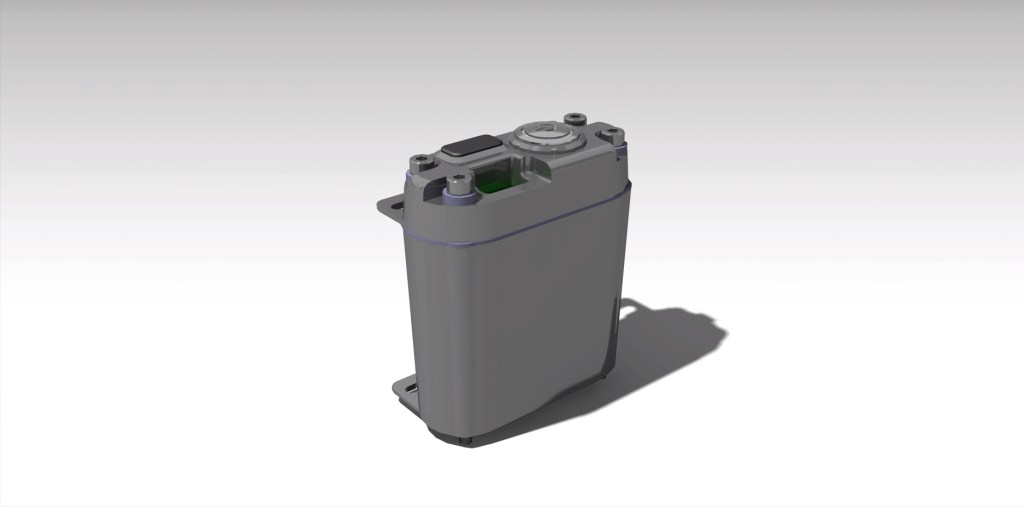
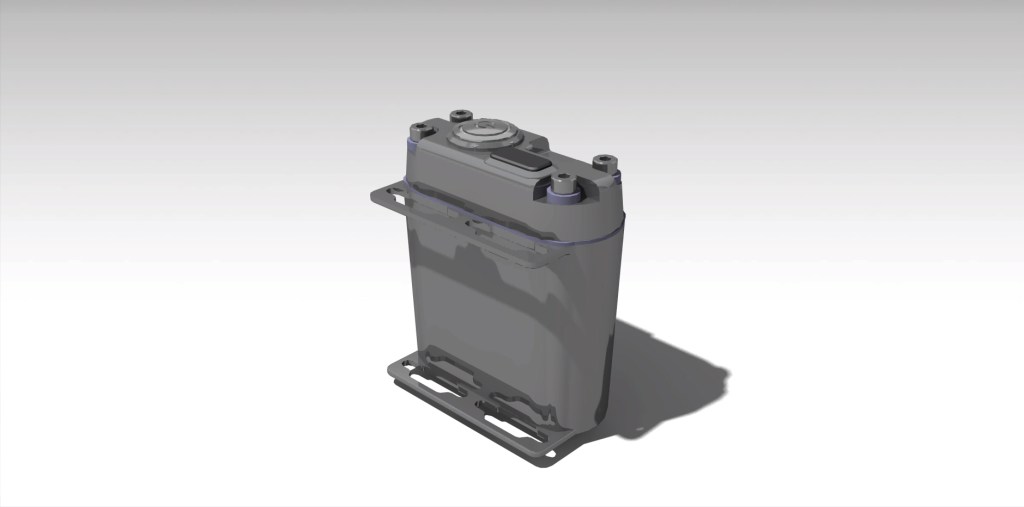
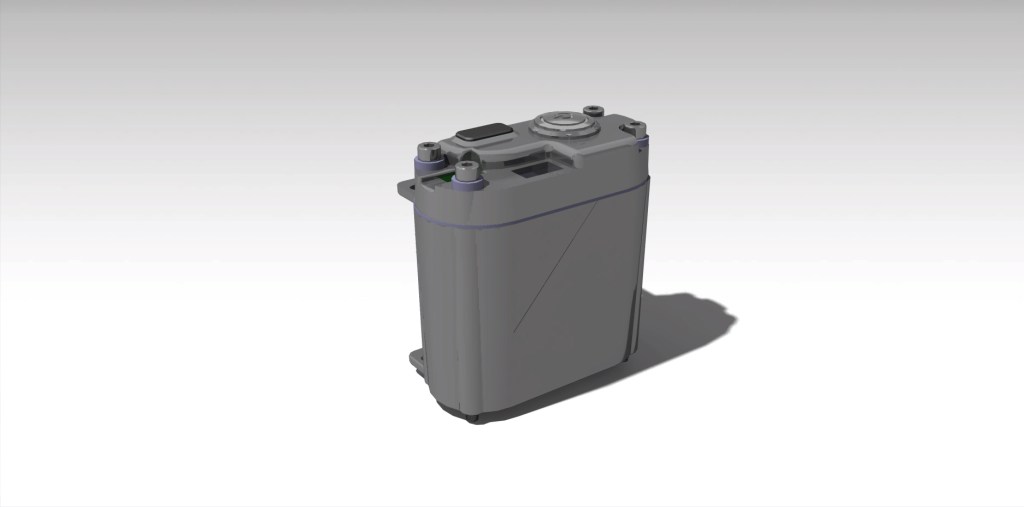
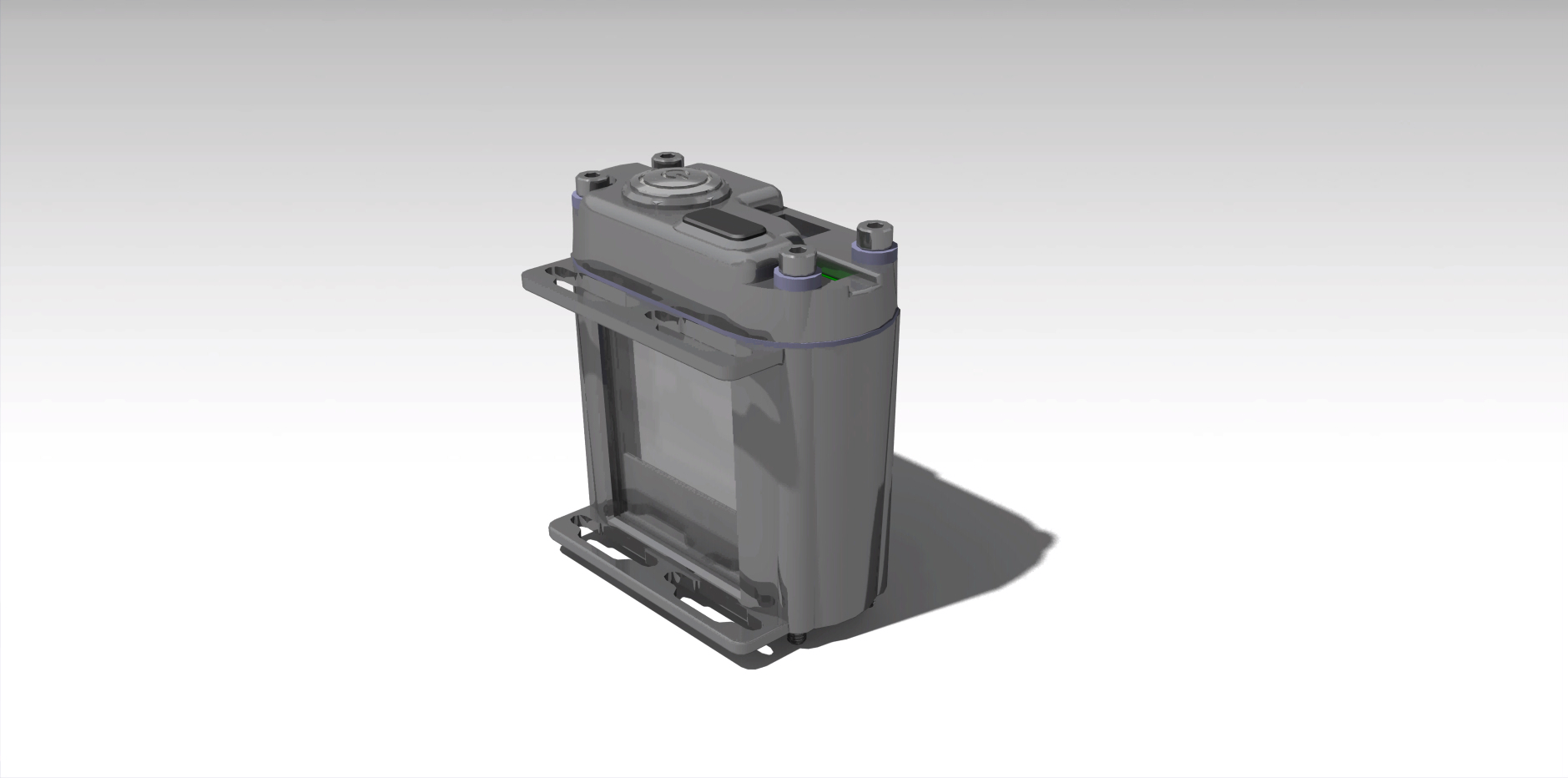
The shape of the device lends itself to be discretely mounted to a plate carrier or stab-vest with an open MOLLE slot, even should said MOLLE slot be underneath other equipment. The T-PRD was explicitly designed to have soft-body pouches, such as a trauma bag, installed over it. This would negate the need for further training to adapt to the added equipment. In addition, the layered drop-in construction with a soft-body cap on a GF-Polypropylene sock to protect the electrical components, and then contained by a cast aluminum outer-shell. This optomizes for weight, while still maintaining a robust and airtight design.
Discretion for Law Enforcement
After feedback from various officers on the design, we are also designing a different packaging for law enforcement officers. While this version will slightly compromise on form-factor, it will present itself in a way that cannot be mistaken by a 3rd party as a weapon or a container that may contain a weapon. This version is denoted as a T-PRD “Echo Compact”.
With that said, both PRDs and the RID fall share the same height, and are comparable to 7mm in sideways width and 5mm in outwards depth with a weight that only ranges between 250g and 300g between the compact and larger variants. In addition, the “Echo” and “Gamma” share the same cast aluminum outer shell.
Battery Life and feedback system
With the initial composition of an off-the-shelf PCB, the battery life with a readily available battery pack was estimated to be between 18-20 hours. However, after the decision was made to design a custom PCB with fewer redundant systems and a less overpowered processor, the aim is to reach a reliable battery life of 24-30 hours or more. However, with the incorporation of a 2800mAh prismatic battery, this can increase the projected battery life to multiple days of uninterrupted use. A more conventional AA Lithium Ion rechargeable battery pack is used for both “Echo” and “Echo Compact”.
The feedback system is currently subject to the specific desires of the standard T-PRD “Echo”, and the T-PRD “Echo Compact”. Current options available include a haptic vibratory feedback system with a silent electro-magnet-based notification system that will silently and discretely communicate radiation levels to the user, a non-haptic data transmission through a 3rd party transmitter to a central command center, or a combination of the two options.
The T-PRD “Echo” will also include an upward-facing shielded counter screen and a sperate full GUI with tactile buttons.
Cable connections
The USB-C receptacle is the designated charging point. The plug used in all Project Sting products is entirely unnecessary for safety concerns, as the receptacle itself is tested to be water-proof to both fresh and sea-water. As such, the plug is for the prevention dust and debris from entering the receptacle cavity.
If you have interest in this product, let us know and we can give you a holistic quote based on your specific needs.
Individual Unit MSRP for:
“Echo Compact”: $700
“Echo”: $800
“Gamma”: $900
Contact Us for bulk order discounts
 dle.enterprises