The definition of the SLD Division originated from the mentality of consumer electronics, optimizing a development pipeline, then employing those same paradigms for products for B2G and B2B markets. This is used predominantly to improve user experiences and cost effectiveness of the final product. However, this mission also extends to the function as a component design optimization-focused R&D support team for other divisions of DLE.
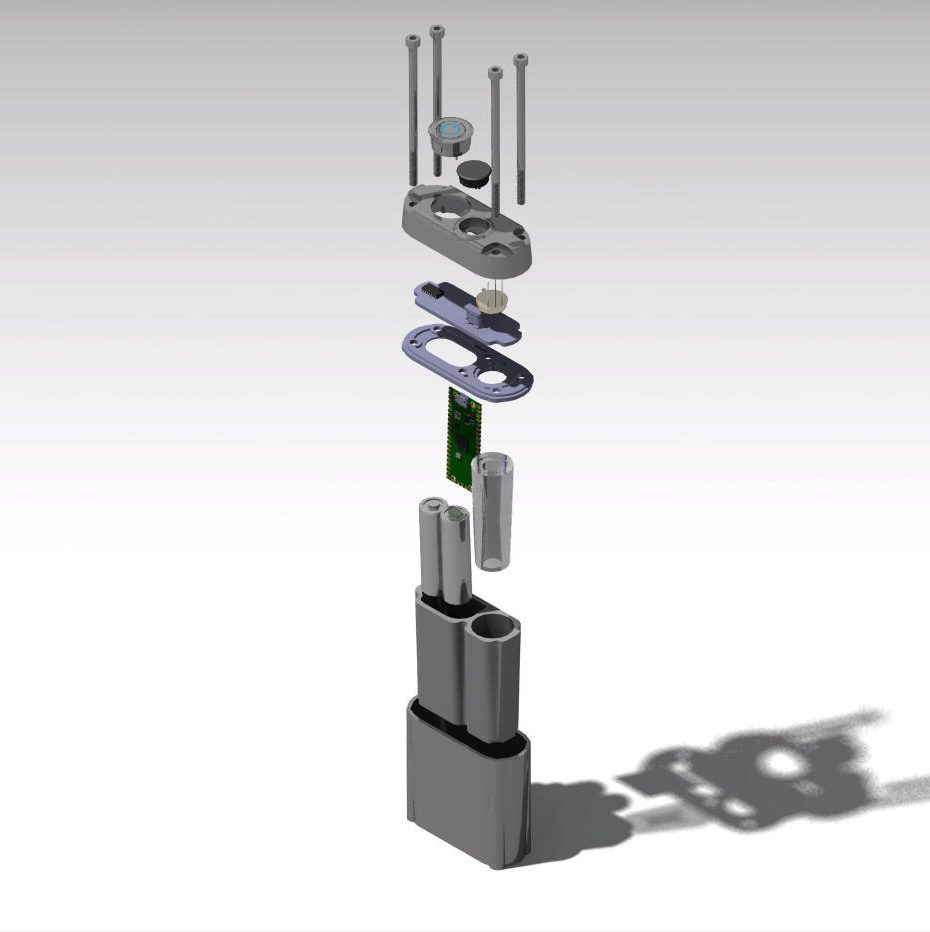
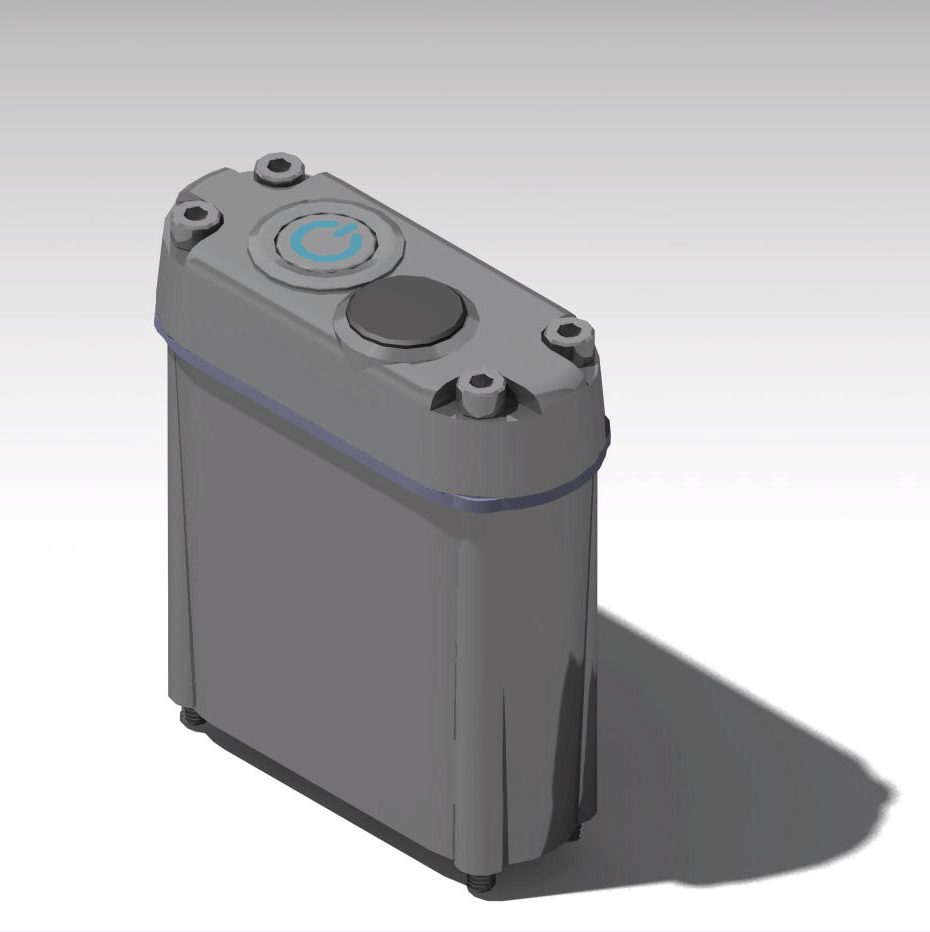
Project Sting: T-PRD
The purpose of the tactical personal radiation detector (T-PRD) is to develop a micro-personal radiation monitoring system that can be used by personnel. It’s function is 3-fold:
- passive detection of radiation
- haptic notification to the user as to the presence of radiation
- transmission of information relevant to the detection of radiation to a central command center
The originally intended user of a Tactical-PRD is an infantryman, special forces operator, or other military personnel in a potentially irradiated battlefield. To that effect, the form-factor was minimized as to fit under other equipment fixed to the side-MOLLE slots of a Gen-3 plate carrier as to neither impede movement of the personnel nor occupy MOLLE slots that would otherwise be used for other pieces of equipment. However, the specific characteristics that made the T-PRD distinct were also relevant to surveyors and other staff responsible for operating around radioactive material or in potentially irradiated landscapes such as nuclear power plants, food processing plants, medical facilities, shipping ports, and fallout zones.

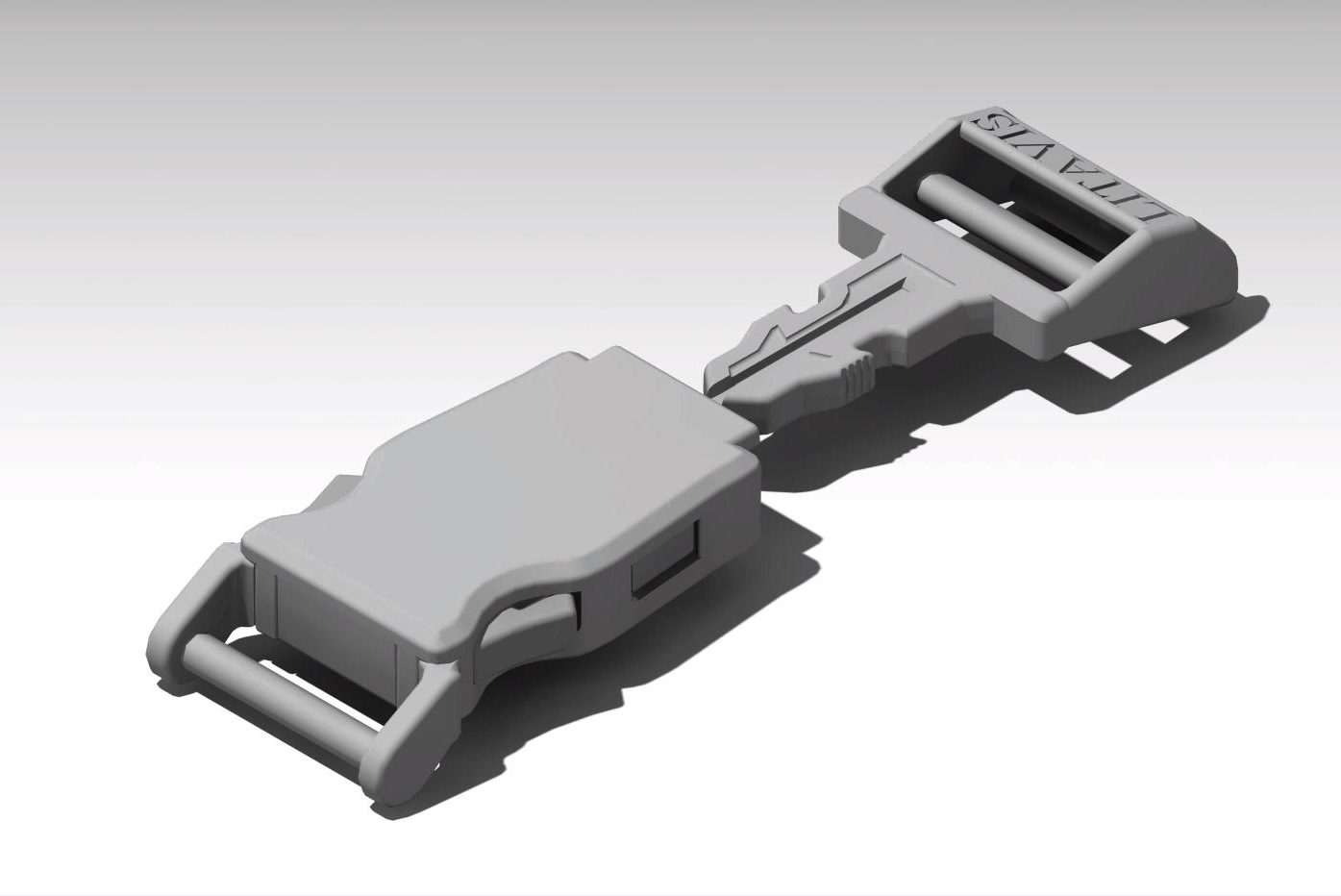
Deformable Load Transfer Mechanism
This product, upon it’s conception, had 3 objectives:
- Develop a belt buckle that did not have any metal parts.
- Without the use of advanced materials and in a profile that does not greatly exceed the dimensions of a conventional belt buckle, ensure a holding strength of at least 125lbs in a functional orientation.
- Without variably sacrificing point 2, ensure a smooth mechanism that is easy to actuate yet tamper resistant.
Evolved from a design tailor-made for use in correctional facilities by prison guards, this design is designed specifically to function as a buckle for staff that pass frequently through metal-detection security portals such as government employees and warehouse workers, in addition to frequent fliers, travelers, and tourists.
This product also has enormous potential for customization due to the large front-facing surface and the possibility to have a custom logo impression or extrusion on this face.
 dle.enterprises